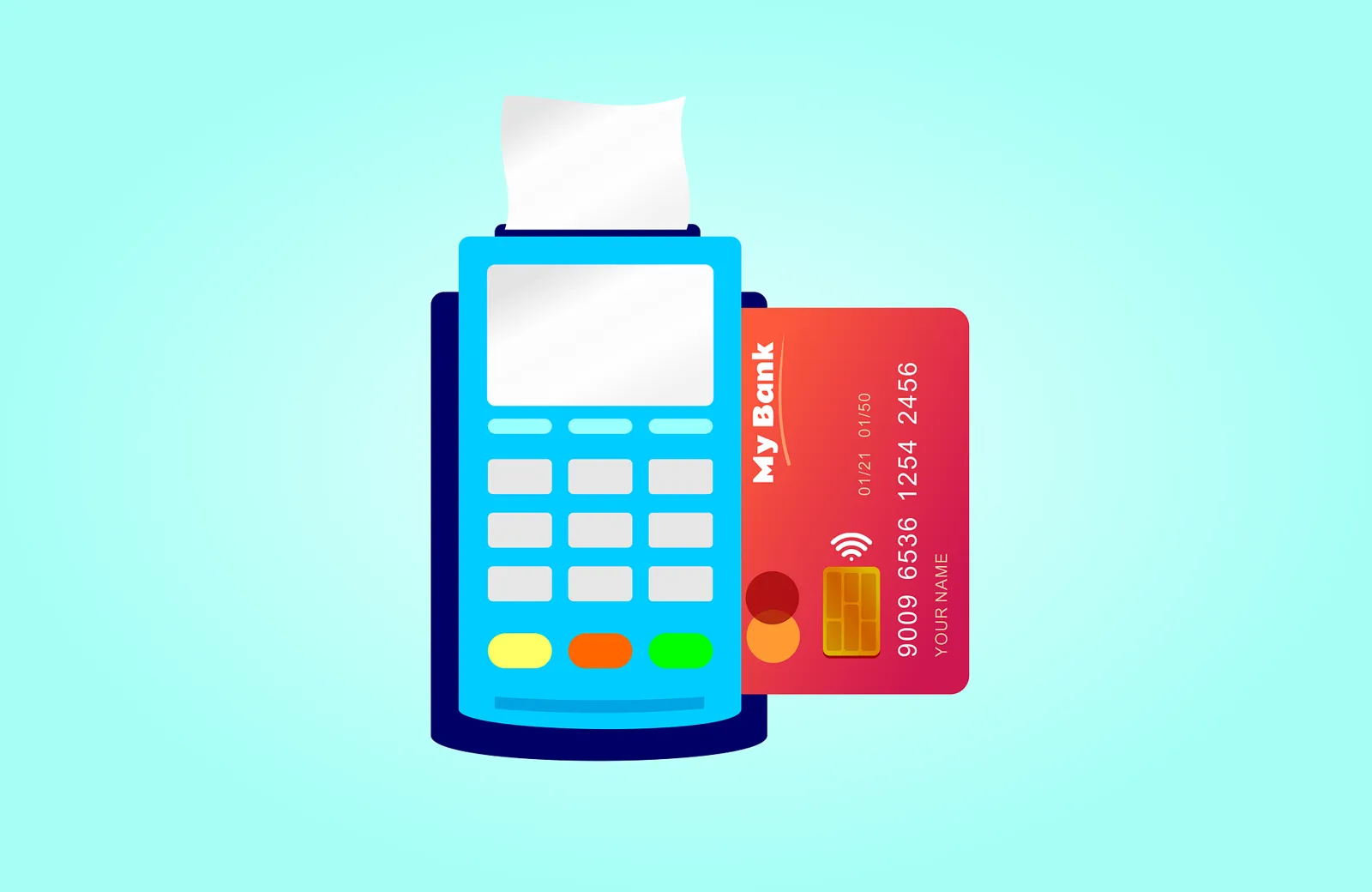
Can you buy crypto with a prepaid card? Sometimes, and usually not on the first try. Most big exchanges either refuse prepaid cards outright or accept them on paper and then watch the payment fail. We read the official payment rules of eleven exchanges and payment providers on 8 October 2026. Only one of them, Simplex, says plainly that it takes prepaid cards, and even Simplex warns that the card issuer may still say no. This guide explains where a prepaid debit card has a realistic chance, what the decline messages actually mean, and why a normal debit card or bank transfer is the better tool for the job.
Can you buy crypto with a prepaid card at all?
Yes, in a narrow set of cases. The card needs to be registered in your own name, enrolled in 3-D Secure, allowed to make online and international payments, and issued by a company that does not block crypto purchases. Plenty of reloadable prepaid cards tick some of those boxes. Very few tick all of them.
The second half of the problem sits on the exchange side. A growing number of on-ramps simply don’t accept prepaid cards. Coinbase’s help center says it does not support prepaid, reloadable, secured or business cards. Ramp, Banxa and Mercuryo, the payment widgets built into many wallets, say the same. So before you blame your card, check whether the place you are paying even allows it. We keep a full list of official stances on our page about crypto exchanges that accept prepaid cards.
It also helps to know what kind of card you actually hold. A prepaid card is not linked to a bank account; you load money onto it first and spend that balance. That is different from a debit card, which draws on a current account, and from a credit card, which borrows. If you are unsure which one you have, our explainer on debit versus prepaid cards covers the differences. Gift cards are a separate, harder case, and we treat them in our guide to buying crypto with a Visa gift card.
Where can I buy crypto with a prepaid card?
Here is the short version of what providers publish. “Doesn’t say” means we found no prepaid rule on their help pages, not that prepaid cards work there.
| Stance | Providers | What it means for you |
|---|---|---|
| Accepts prepaid | Simplex | Prepaid and virtual cards allowed; issuer may still decline. US: Visa only |
| Conditional | Paybis, CEX.IO | Paybis: only with 3-D Secure. CEX.IO: possible but most attempts fail |
| Refuses | Coinbase, Ramp, Banxa, Mercuryo | Prepaid cards rejected by policy |
| Doesn’t say | Kraken, Binance, MoonPay, Crypto.com | Debit/credit rules only; prepaid not listed |
Notice that the “conditional” row includes CEX.IO, a long-running exchange that has accepted card payments since its early years. Its support article says it is technically possible to verify a prepaid card and deposit with it, but that most prepaid transactions are not successful, especially when it comes to withdrawing funds. Its separate payment cards guide is blunter: make sure your card is not a business, prepaid or gift card, and use a personal Visa or Mastercard debit or credit card instead. We think that is honest advice, and it matches what we see everywhere else.
How to buy crypto with a prepaid card, step by step
If you still want to try, do it in an order that gives the payment the best chance. Every step below removes one known reason for a decline.
- 01Register the card in your name
Log in to the card issuer’s site or app and make sure your full legal name and home address are on file. Exchanges compare both with your verified account.
- 02Switch on 3-D Secure and online use
Confirm the card can receive one-time passcodes or app approvals, and that online and international payments are enabled.
- 03Ask about quasi-cash
Call or message the issuer and ask whether it allows quasi-cash or cash-advance transactions. Crypto purchases are coded that way.
- 04Pick a provider that allows prepaid
Check the policy table above. Paying at a service that refuses prepaid cards wastes attempts and can trigger fraud flags.
- 05Start small, and don’t hammer retry
Try a modest amount first. MoonPay warns that repeated retries can lead your bank to block the card.
- 06Move the coins off quickly if you need to
Once the purchase settles, send the crypto to the wallet you will use. Card withdrawals back to a prepaid card often fail.
One practical point on step two: switch off any VPN and ad blocker before you pay. CEX.IO lists both as common reasons the 3-D Secure pop-up never loads, and the same applies at most other on-ramps.
Why prepaid cards get declined when you buy crypto
A card payment is not a two-party deal between you and the exchange. Several companies see the transaction, and any of them can stop it. The chain below shows where the checks happen.
- YouEnter card at the on-ramp
- ExchangeCodes it MCC 6051 + quasi-cash
- Card networkVisa or Mastercard routes it
- Issuer checks3-D Secure, name, address, rules
- Approve or declineDecision comes back in seconds
1. The quasi-cash flag (MCC 6051)
Visa’s merchant data standards manual, in its April 2026 edition, says crypto purchases must use merchant category code 6051 or 6012, and must carry a special condition indicator and a quasi-cash flag in the authorization request. In plain terms, every crypto purchase arrives at your card issuer clearly labelled as something close to cash. Issuers can block that label with a single rule, and many prepaid programs do. Some debit and credit issuers let it through but treat it like a cash advance. Paybis warns that banks can charge a cash advance fee of up to 5% when they classify a crypto purchase that way.
2. 3-D Secure
3-D Secure is the extra step where your bank asks you to approve an online payment, with a one-time code, an app prompt or biometrics. EMVCo, the body that maintains the standard, describes it as a way for the merchant and the issuer to exchange data and authenticate the buyer. Kraken requires it for non-US clients, Paybis calls it mandatory, and Ramp, Simplex and MoonPay all use it. Many cheap or anonymous prepaid cards have no phone number or app linked to them, so they cannot answer the challenge and the payment times out.
3. Name and billing address (AVS)
Exchanges want the card to belong to the account holder. Kraken says the card must be in the same legal name as your Kraken account. Paybis says the name must match your verified ID. Ramp asks for an accurate billing address and rejects PO boxes. CEX.IO asks US and UK customers to submit a billing address when they link a card. Address verification (often called AVS) compares what you type with what the issuer holds. If you never registered the card, the issuer holds nothing, and the check fails.
4. Issuer policy and withdrawals
Finally, issuers simply have rules. CEX.IO notes that most card issuers have policies on using prepaid cards for online payments. Binance, MoonPay and Crypto.com all say declines often come from the issuer’s own risk settings rather than from the exchange. And even if the purchase goes through, sending money back to a prepaid card later is the step most likely to fail, which is exactly what CEX.IO warns about.
Prepaid Visa, prepaid Mastercard, prepaid debit: does the label matter?
Mostly it doesn’t. Whether you buy crypto with a prepaid Visa card or a prepaid Mastercard, the decisive factors are the issuer’s rules and your card’s registration, not the logo. There is one notable exception in the US. Simplex says Mastercard is not supported for crypto purchases from the US, and that US users can only use Visa personal debit, business debit and prepaid cards. If you hold a US prepaid Mastercard, Simplex is off the table.
Protection is another difference worth knowing. Visa says most of its prepaid cards are covered by its Zero Liability policy, but that some prepaid cards carry fewer protections than debit cards, and that Zero Liability does not apply to anonymous prepaid card transactions. If something goes wrong with an unregistered card, you have very little recourse.
People also search for ways to buy crypto with a “prepaid credit card”. In practice that phrase usually means a reloadable prepaid card with a Visa or Mastercard logo; it is not credit at all. If you genuinely have a credit card, many exchanges accept it, though Crypto.com rejects credit cards for its US cash account top-ups and Kraken accepts only debit cards from US clients. The fees and cash-advance treatment are covered in our crypto card fees guide.
What actually goes wrong: the questions people post on Reddit
Search forums for “buy crypto with prepaid card reddit” and the same handful of stories repeat. We can’t verify individual posts, but the patterns line up neatly with the official rules above.
“The card works on Amazon but not on the exchange.” That is the quasi-cash flag at work. A shop purchase carries an ordinary merchant code; a crypto purchase carries MCC 6051 and a quasi-cash indicator, and the issuer’s rule only bites on the second.
“I was charged, then the money came back.” Card verification often uses small holds or micro-charges. Crypto.com, for example, places a verification hold worth $0.10 SGD in local currency that can take up to seven days to drop off. Pending authorizations that never complete also show up for a few days before they vanish.
“The passcode screen never appeared.” Usually a VPN, a pop-up blocker or a card with no phone number on file. Fix the first two; for the third, register the card or use a different one.
“Now my normal card is blocked too.” Repeated failed attempts look like fraud. MoonPay specifically warns that retrying can lead the bank to block the card. Two attempts, then stop and change method.
We have watched readers lose hours on this. The prepaid card is almost never the cheapest route either: you pay to load it, then risk a cash-advance style fee on the crypto purchase. If you have a bank account, a debit card or bank transfer is faster and cheaper. Keep prepaid cards for what they are good at, which is spending, and if that is what you are after, look at a proper crypto prepaid card instead.
Buying crypto with a prepaid card and no KYC
This is the angle a lot of people are really asking about, so here is the straight answer: regulated platforms will verify your identity whatever card you use. CEX.IO says identity verification is required for every payment method. Paybis and Kraken match the cardholder name against your verified ID. A prepaid card does not change that; if anything, an unregistered card makes the name check impossible to pass.
The law sets the boundaries. In the EU, anonymous prepaid e-money is limited to €150 stored, and online payments above €50 per transaction lose the exemption. In the US, FinCEN’s prepaid access rule excludes products of $1,000 or less only if they cannot be used internationally, which is why American gift-style cards work at US merchants only. Neither regime is designed to let you buy crypto anonymously at scale. Our page on no-KYC crypto cards goes through what really exists and what is a scam.
Better ways to pay: personal debit card or bank transfer
Our recommendation is simple. Use a personal debit card in your own name with 3-D Secure turned on, or use a bank transfer. Debit cards pass the name, address and 3-D Secure checks that trip up prepaid cards, and bank transfers skip the card issuer’s quasi-cash rules entirely.
CEX.IO is a useful example of how this works in practice. The exchange has been running since 2013, is registered with FinCEN as a money services business (NMLS 1804170) with state licenses in about 39 US jurisdictions (not New York or California), and is registered with the UK FCA under the Money Laundering Regulations (FRN 1007192), which is a registration rather than full FCA authorization. It also has an entity registered with the Bank of Spain and says it passes PCI DSS Level 1 audits. It accepts Visa and Mastercard debit and credit cards (physical and virtual, personal only), Apple Pay, Google Pay and bank transfers such as ACH in the US and SEPA in Europe. By its own figures, debit cards see 25% fewer declines than other methods. New customers in their first three months after ID verification can spend up to $1,000 a day and $3,000 a month on cards, and the minimum Instant Buy is 20 USD, EUR or GBP.
Two caveats. CEX.IO does not serve Canada (since July 2023) or India, and visitors in the EEA currently see a MiCA service notice saying some account functions are unavailable, so check what you can do from your country before you sign up. CEX.IO also no longer has a card of its own: its card was discontinued on 3 February 2026, which we cover on our CEX.IO card page.
- The card is a personal debit or credit card, not prepaid, gift or business
- The name on the card matches your verified exchange account exactly
- 3-D Secure is active and your phone can receive the code or app prompt
- VPN and pop-up blockers are off for the checkout
- Your bank allows crypto, quasi-cash or cash-advance payments
- Or skip cards completely and use ACH, SEPA or another bank transfer
If your end goal is spending crypto rather than holding it, flip the process around. Buy the crypto with a method that works, then load it onto a card built for crypto. Our guide to loading a crypto prepaid card covers every top-up route, and if you want to go the other way and turn coins into a prepaid Visa, see buying a prepaid card with crypto.
Regional notes
United States. Simplex accepts US prepaid cards only if they are Visa. Kraken takes debit cards only from US clients. Crypto.com’s USD account accepts Visa Debit and Mastercard Debit or Maestro cards issued by a US financial institution, charges 1.49% on card top-ups and rejects credit cards. Coinbase refuses prepaid cards nationwide. See our USA country guide for cards available to US residents.
Europe. Crypto.com’s EUR account accepts Visa and Mastercard debit cards issued by an EU financial institution, with a 3.99% fee on card top-ups. EU anonymous e-money rules make unregistered prepaid cards almost useless for online crypto purchases above €50. Our Europe guide has the MiCA background.
India. Crypto.com notes that Reserve Bank of India rules from 2020 limit cards to local use unless online and international payments are activated, and that some Indian banks still decline crypto purchases. The India page explains the wider picture.
Whatever your country, the pattern is the same. A prepaid card can occasionally buy crypto, but it is the method most likely to fail and the hardest to fix when it does. Use it only if you have no bank account, and keep the amounts small.
Frequently asked questions
Can you buy crypto with a prepaid card?
Why does my prepaid card work on shopping sites but not on crypto exchanges?
Can I buy crypto with a prepaid card and no KYC?
Is a prepaid Visa better than a prepaid Mastercard for buying crypto?
What is the best way to pay for crypto if my prepaid card keeps failing?
Sources and official pages
- Coinbase Help — add a payment method troubleshooting
- CEX.IO Support — Can I use a prepaid card?
- CEX.IO Support — Troubleshooting card payment declines
- Paybis Help — Credit/debit cards
- Simplex — Which cards does Simplex accept?
- Ramp Network — What made my card check fail?
- Visa Merchant Data Standards Manual (April 2026)
- EMVCo — EMV 3-D Secure
Skip the decline loop. Pay with debit or bank transfer.
A personal card in your own name with 3-D Secure, or a bank transfer, is the route that usually works first time.
Buy cryptoExchange running since 2013 · registered with FinCEN (US) and the FCA (UK) · card, Apple Pay or bank transfer